Wednesday, January 16, 2008

What does it mean to be an Ethical Democratic Citizen?


The concept of being an ethical democratic citizen is a slippery one to grasp; all three of these words are loosely defined. Therefore everyone has their preconceived notion about their meanings; couple this with their personal values, convictions, and ideals and you have one messy topic on hand. But alas, for the sake of intellectual enlightenment and stimulation every person should venture on a quest for their personal meaning of what it means to be an ethical democratic citizen and then strive for it. To truly discover what it means first the terms must be defined on their own, and then molded together to create an image you would like to be reflected in.

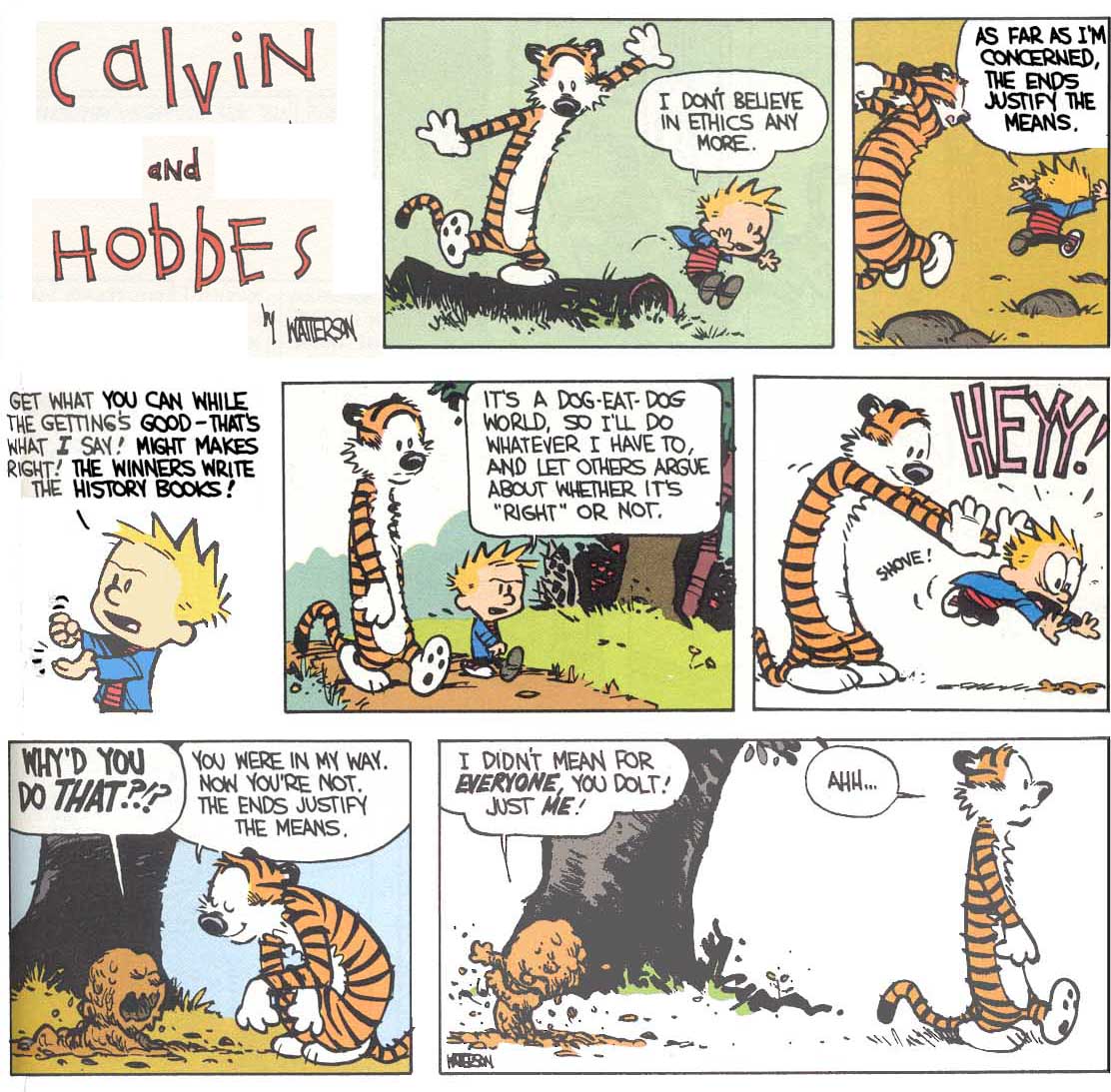
Reflection is a key part of being ethical. You must be able to live with yourself and your choices, and in order to achieve this you must live up to your own standards. Ethics is the philosophical study of moral values and rules (as defined by wordnet). Obviously this is the most difficult of the three words to define just because to define “ethical” you must define “ethics” and ethics is just a blanket term for a whole set of a person’s individual beliefs. Commonly these beleifes are pertaining to religion, or love. "Love of the concrete other," as Cornell West states, is a very christian-based idea that has become infused with, or is else ingrained as part of human nature, many modern day moral sets. Diversity is key and you must have a love of all humanity before you can truly love at all. It is taught to young children, teens, and preached by the politicians. But this is only one moral, and on many issues there is too big of a divide to have a common set of ethics. Therefore in order to be ethical it cannot be defined what your values should be, but that you have things that you believe in and are willing to defend them.
Being willing to defend your beliefs is different than having the opportunity to do so. However, there is an outlet for such opinions in a government like the United States has. Being a democratic republic we take pieces of both the democracy and the republic. In a true democracy every person votes on every issue. Because of job specialization and just general practicality it does not work for everyday Americans but this is why we implemented the republic aspect. This allows people to vote for representatives who do all of the voting for them. The voting public’s responsibility is to elect representatives with similar ethics as themselves and therefore they are spoken for. Unfortunately some people have become lazy. This laziness can be attributed to the Mass Man. "What is the Mass Man? The Mass Man is that type of man who is not interested in spiritual values; is not interested in knowing something about the truth: it is the type of man who thinks he is completely entitled to any form of freedom, absolute freedom. Life (has) to be easy; no restrictions, please, no criticism, and (he) demands instant satisfaction of all his physical and material needs." - Rob Reimen. This type of drive is exactly what once and ideally still would drive the democratic part of a person to his or her own personal ethics to an extent that they would be compelled to vote. Many people in todays age do not vote simply because they see it as an inconvience, or they do not think that their vote matters. “Bad officials are elected by good citizens who do not vote.”-George Jean Nathan. They are not contributing actively as citizens. As this video states, people need not only to get mad, but to do something about it.


Citizens are those people who are members of a political society such as this democratic republic. Every person who is born in, or immigrates legally to, America has citizenship. One thing that sets American citizenship apart from citizenship in other countries is the active role in politics that comes with the title. Being an American citizen gives a person the right to vote for the leaders who will in turn vote similarly to what their ethics deem right. Yet, although you have this right, is it a responsibility to use it? In order to be a citizen you need not exercise your right. They hand the title out, along with the power of one to make a difference. “Always vote for principle, though you may vote alone, and you may cherish the sweetest reflection that your vote is never lost.” John Quincy Adams hit this nail right on the head. You may not be required to vote; your citizenship isn't up for reevaluation based on your lack of voting. Voting is a privliage that should be utilized but it is the individuals right to be a Mass Man, too lazy to get the remote that he dropped under the table, and reserve your vote. Voting is no more difficult than picking up your mail, yet so many people decide it's too difficult every year. “Voting is a civic sacrament.” -Theodore Hesburgh

The ethical democratic citizen is a rare and wonderful thing. Many people have ethics and yet blindly vote on a party line, or don't vote at all. Some people have no ethics and just vote for (or against) someone based on gender or skin color, or some other reason that has nothing to do with policy. Some people just don't care how their government is run as long as they get instant gratification and their daily lives aren't directly (tracebly) impacted. The ethical democratic citizen is a person motivated by goals to better society based on their own personal ethics, who has the internal drive to do so (which includes self-education), and who has and fully utilizes the privladge of being a citizen by voting.
“Individual rights are not subject to a public vote; a majority has no right to vote away the rights of a minority; the political function of rights is precisely to protect minorities from oppression by majorities (and the smallest minority on earth is the individual).” -Ayn Rand

Securities Vs. Liberties

Security is defined, by wordnet, "the state of being free from danger or injury." Liberty is the ability to govern one's own actions; your personal freedoms. Most Americans would say that the Constitution's Bill of Rights is our list of liberties. Among our amendments which are widely known are the freedoms of speech, religion, assembly, press, petition. The fourth Amendment states that "The right of the people to be secure in their persons, houses, papers, and effects, against unreasonable searches and seizures, shall not be violated, and no Warrants shall issue, but upon probable cause, supported by Oath or affirmation, and particularly describing the place to be searched, and the persons or things to be seized." To my knowledge there has been little debate over the meaning of this Amendment, as it is probably one of the clearest. You have the right to privacy on your person and in your house. Without probable cause the government cannot search you or your things.

It was stated during the first video that it is (or is supposed to be) impossible to to gain acess to internal US Communications without judicial approval, but the USA Patriot act ('This Act may be cited as the `Uniting and Strengthening America by Providing Appropriate Tools Required to Intercept and Obstruct Terrorism (USA PATRIOT ACT) Act of 2001'
) changed everything.


Title V: REMOVING OBSTACLES TO INVESTIGATING TERRORISM states that the government would have "Miscellaneous national security authorities." (Sec. 505.)

TITLE VII:INCREASED INFORMATION SHARING FOR CRITICAL INFRASTRUCTURE PROTECTION allowed for the"Expansion of regional information sharing system to facilitate Federal-State-local law enforcement response related to terrorist attacks." (Sec. 711.)

TITLE IX: IMPROVED INTELLIGENCE grants "Temporary authority to defer submittal to Congress of reports on intelligence and intelligence-related matters." ( Sec. 904.)


Photobucket

These are just three of the more ludacris liberties that were sacrificed when this act was passed. As far as I can tell, there was panic, and in that panic we signed over our rights. However, people are settled from 9-11-01 having not seen any aftershock. Now they have decided they made a rash decision. They want their rights back; but look at this document. It is so vauge, so noncomittal, and so completely senseless and yet it has all the proper signatures to make it law.

But then, it goes against the constitution, doesn't it? The Constitution has the Supremecy Clause, so we must follow it. Had the constitution been amended as such, we would be in quite the predicament. But as I stated, we have a supreme law of the land, and it is not the USA PATRIOT Act.
While President Bush may have said, on record, that the only information to be monitered was that which was suspected to be directly related to a terrorist, he granted himself the authority to use "data mining" which collects vast amounts of personal information from everyone- not just suspects. He used digital trails of everyone in Las Vegas, matching them with known terrorists for leads. This was an unconstitutional use of his power, because while he was looking for terrorists he used information from many unknowing people from private sources to track them.

In the debate of Securities vs. Liberties, America chose long ago what mattered most to them which is why Article IV of the Constitution still remains unamended after hundreds of years.

Monday, December 10, 2007

The Mass Man

The Mass Society and Media, and their shaping of the Mass Man

"What is the Mass Man? The Mass Man is that type of man who is not interested in spiritual values; is not interested in knowing something about the truth: it is the type of man who thinks he is completely entitled to any form of freedom, absolute freedom. Life (has) to be easy; no restrictions, please, no criticism, and (he) demands instant satisfaction of all his physical and material needs."
So Rob Reimen eloquently states the crisis man faces in the modern world of the fast and the furious. In his many arguments this one quote stood out. Instant gratification, desensitization, and suffocation; the Mass Man is no stranger to these words and yet he knows not their impact on his life.
The Mass Man is the product of a Mass Society; namely a Mass Media. Ev
olution is a natural part of living. You become accustomed to images and ideas that are constantly pressed upon you. (For an example of this, see this study.) You adapt. However, these things take time. Reimen uses the example of sex; a woman's bare leg was once enough to arouse a man. The thought of this in today's society is laughable. The things that we allow on cable television, in PG-13 movies, even in the classroom are practically pornographic by these standards.
The natural process of becoming accustomed to these things was rapidly sped up by the revolution of media. Instead of a daily paper or a radio show we have started relying solely on TV and the web. We have become increasingly visual creatures. We have gotten used to Google
(0.30 seconds) searches and 24 hour news stations. Why bother reading when you can watch? Why bother waiting if you can have it now? Why buy the cow when you get the milk for free?
With this lifestyle and these resources you would think that people would have more- instead of less- time. However, this is not the case. Living life in fast-forward leaves the persons tired, jaded, or most common
ly lazy. Having never had to struggle to obtain anything, anything that seems out of reach while sitting on the couch is obviously not worth struggling for. There is a new and better simulation to keep you quiet and occupied shoved under your nose. The Mass Man is a product of a Mass Media which works to keep the mind subdued. The subject of spirituality, the idea of striving versus thriving is unheard of.

Thursday, November 1, 2007

group project proposal

November 1st, 2007

Semester Group Project

Outline/Summary of Ideas

This group includes Ashleigh, Hailey, Molly and Kyle.

Our group project is on rape in third world countries.

We were inspired to choose this topic by Molly, who read an article on the subject and had a powerful experience. The passion she brought to the table when she introduced us to the idea was more than enough to inspire the rest of us (except for possibly Kyle, who is not completely on board.)

So far we have discussed many different mediums. We are tentatively resting on some sort of show, not slide but movie, with music, narration, news clips, informative slides and any relevant images. Of course they will be tasteful and class appropriate, but hopefully effective.

As far as putting things together, we have done a lot of research. Most of it has been books. We have several inter-library loans at the moment, as well as regular library books. There are online resources we have yet to access, but we wanted a more reliable base.

We are thinking about doing a general overview of the issue with statistics and facts to put our position out there and to educate. We plan on following this up with a story of a real individual who has survived these types of tragedies.

If you want more information we can show you the books. They’re currently divided among group members who are reading them to find relevant information.

Some topics and issues that we’ve discussed are:

  • war
    • rape camps
    • systematic rape
    • rape as a weapon (offensive)
  • culture
    • rape as custom
  • acceptability
  • consequences for rapists
  • effects on victims

Wednesday, October 31, 2007

Premise? Conclusion?

Premise: Repeated exposure to something causes you to be accustomed to it.

Conclusion: Giving children provocative toys will acclimate them to an idea we may or may not be comfortable with them becoming acclimated to.

Monday, October 15, 2007

Moral Relativism

Moral Relativism: the phrase we all love to hate. As Stanford Encyclopedia defines it, moral relativism is a rarely professed, yet often talked about view on philosophy. Many more people are absolutists, posing as relativists. Moral relativism states that ethics are not strict to humanity, as much as imposed by the will of a group of people who inhabit a certain area or culture. Very commonly moral relativism is preached by those aforementioned posers, not in it's pure form, but mislabeled. What many so-called relativists preach is not so much actual relativism, but tolerance. The difference lies in this; relativists will not say something culturally acceptable somewhere is unethical, while a poser will call them unethical but try to respect cultural boundaries and the reaches of their own society's impact on others.
The dominance of men over women has been a long standing cross-cultural phenomenon. Being a member of the 'fairer sex,' (and not appreciating THAT label one bit) has it's perks, but it also has it's negative sides. There exists a tribe known as the Hamar.

In the lower Omo Valley of Southern Ethiopia You can find a lot of interesting tribes with different customs. One of them are the Hamar people,numbering about 30.000, they are known for their practice of body adornment and wearing a multitude of colorful beads. Their society consists of a complex system of age groups. To pass from one age group to another involves complicated rituals. The most important ceremony for young men is the "bull jumping" ,the final test before passing into adulthood. The ceremony lasts three days and late in the afternoon on the final day, different number of bulls(in our case were 6)are lined up side by side. The candidate rushes towards the animals, vaults onto the first bull's back and then runs across the line of them. At the end of the line he turns back to repeat the performance in the opposite direction. He must make this several times without falling.
Before the main event of the ceremony the unmarried women of his family have to prove family's courage allowing themselves
to be whipped. I noticed that were the women that picked out and encouraged the not very enterprising young men to whip them. Before,throughout and after the whipping ceremony the women were dancing and singing until late night. -http://www.trekearth.com/gallery/Africa/Ethiopia/photo348332.htm

Suppose you came across this tribe. You saw this ritual being preformed. The women are proud do to this! The women are willing, and ready. They get themselves intoxicated on alcohol beforehand to numb themselves to the pain; they know what to expect. They are judged by their scars. This is a real life scenario. This happens. Even though this is a cultural decision and tradition, I do not agree with it. It is awful that men in this situation feel the need to show their power over women by whipping them, and it's even worse that the women are so conditioned to this life that they would consider it a dishonor to not participate. A relativist would say that this is ok, because it's a cultural choice, and they have their own set of ethics to abide by. Having seen this, I cannot imagine myself tolerating that kind of unprovoked violence in any culture. Reacting to this real life situation I have proven to myself that I am, in fact, an anti-relativist.

Relativism is not a reasonable approach to ethics, and yet neither is absolutism. I consider myself to be an anti-relativist. I consider myself to be an opinionated person. When I think something is wrong, I think it is wrong. It is not impossible to sway me, and I try to listen and understand both sides of an issue before I come to a decision. However, in my current situation I do not feel particularly qualified to tell people what is right and what is wrong. You can say 'is abortion right or wrong' and I will tell you that I don't agree with it. But I won't tell you not to do it. I am pro-choice. My morals are absolute, but my resolution is relative. How strongly I will impose my absolute views on other people is relative. I do not think abortion should be outlawed in first trimester. Now, having confused myself a great deal, I am going to end this blog.

[Relativism is like communism; it sounds great on paper, but it would never work.]

Wednesday, September 19, 2007

Question 1

Is love, as Cornell West describes it, an essential element of ethical, democratic citizenship?

Cornell West describes love in a sort of abstract way. Love, to him, has nothing to do with knowing, understanding, or desiring to know anything about the object of this affection besides the fact that they have the same scientific name as you. Love the 'concrete other.'Cornell West thinks you should love people because they are people. This suggests that one of the inalienable rights that you get for being born human is the love of your fellow man.
I do not agree with this. I do not think that you need to love every other person to be ethical. I think you should respect people, and try your best to understand them before decidedly hating them, but you don't have to love them. People have to earn your love. Recently, I have read two books which play a big role in my current view of the subject. "Anthem" by Ayn Rand, and "Brave New World" by Aldous Huxley. These are two different takes on a future where people put the collective 'we' before the individual. It may seem like a far reach, but the way Cornell West talks about love is echoed in the books. They say things like 'everyone belongs to everyone else'. In both of these books such a dedication of self to humanity became an obsession, to the point where individuality was even lost. The word "I" has left existance, lost, because it was not used. The main character in Anthem had this to say on losing individuality: "But I still wonder how it was possible, in those graceless years of transition, long ago, that men did not see whither they were going, and went on, in blindness and cowardice, to their fate." This is an extreme, eventual case, I realize, but an interesting take on collectivism and on where 'brotherly love' could take us.
Also, imagine a world where everyone gave away their love to every other person. What would it mean then, to love someone? Thomas Paine said, in his essay The Crisis, "What we obtain to cheap, we esteem too lightly." He is saying that anything that we come by naturally, that which we don't have to work for, means almost nothing to us. He goes on to say "it is dearness only, that gives everything it's value." We put a value on love because it takes something to achieve. When you have to work towards something it gives it dearness. I believe that just giving away love takes away it's value, and therefore it's worth in todays society.
To be an ethical, democratic citizen you need to be informed, respectful, and be constantly vigilant in deciding what is right and wrong. You need to be able to see your own errors in thinking and judgment. You can't disrespect people for disagreeing with you, and you can't set your ideas and morals in stone: you are human, and you are probably wrong. However, you do not need to love every person in your country to be a good citizen. You can sympathize with them, you can love your country, and you can feel unity with your fellow citizens, but you don't need to go as far as love. Love is something to be earned and tended, and not freely given.